
Mirror-Image Synthetic Life: An Under-Recognized Wildcard Reshaping Synthetic Biology’s Future
Mirror-image synthetic life—organisms built from mirror (enantiomeric) biological molecules—poses a barely acknowledged disruptor poised to challenge current biological and regulatory paradigms. This hypothetical form of “mirror life” could evade natural immune defenses and blur lines between natural and synthetic organisms, demanding reconsideration of capital deployment, oversight frameworks, and biotechnology industrial design.
While discussions in synthetic biology largely focus on applications like gene editing and personalized microbiome interventions, the unique biochemistry of mirror life represents a structural inflection potentially remapping risk governance, industrial safety, and investment priorities over the next 10 to 20 years.
Signal Identification
This development qualifies as a wildcard signal due to its low current visibility, high disruptive potential, and uncertainty about its trajectory and consequences. Mirror life is still largely theoretical, but it introduces fundamentally new biological properties not encountered in naturally evolved organisms or in common synthetic biology applications today (Ecoticias 06/05/2026). The time horizon for plausible emergence and impact is medium to long term (10–20 years), reflecting technical challenges but also the accelerating pace of synthetic biomolecular innovation.
The plausibility band is medium—research into mirror biomolecules is active but experimental, while dual-use risk governance and industrial preparedness remain embryonic. Sectors exposed include biotechnology R&D, pharmaceutical manufacturing, agricultural biotech, biosecurity, and regulatory agencies globally.
What Is Changing
Current biotech emphasis on gene editing, personalized medicine, and microbiome modulation illustrates an evolutionary rather than revolutionary path in synthetic biology (IMJ Health 12/01/2026; Segal’s team, Israel). These advances improve control over natural biological substrates but operate within the canonical chirality of life’s chemistry—homochirality, where biomolecules exist in one mirror-image orientation.
The mirror life concept posits synthetic organisms constructed from the enantiomers (mirror images) of natural biomolecules, such as D-amino acids instead of L-amino acids. These mirror organisms would be biochemically orthogonal to all known life, which could enable evasion of immune detection or conventional pathogenesis (Ecoticias 06/05/2026).
This evolution contrasts with gene-editing platforms exploring programmable antiviral systems by modifying canonical DNA architectures (Scientific Inquirer 05/01/2026). Synthesizing mirror life demands recreating entire biomolecular frameworks from first principles, a systemic shift rather than incremental technology improvement. It challenges assumptions underlying existing biosecurity and manufacturing models, such as biological containment and immune system interactions.
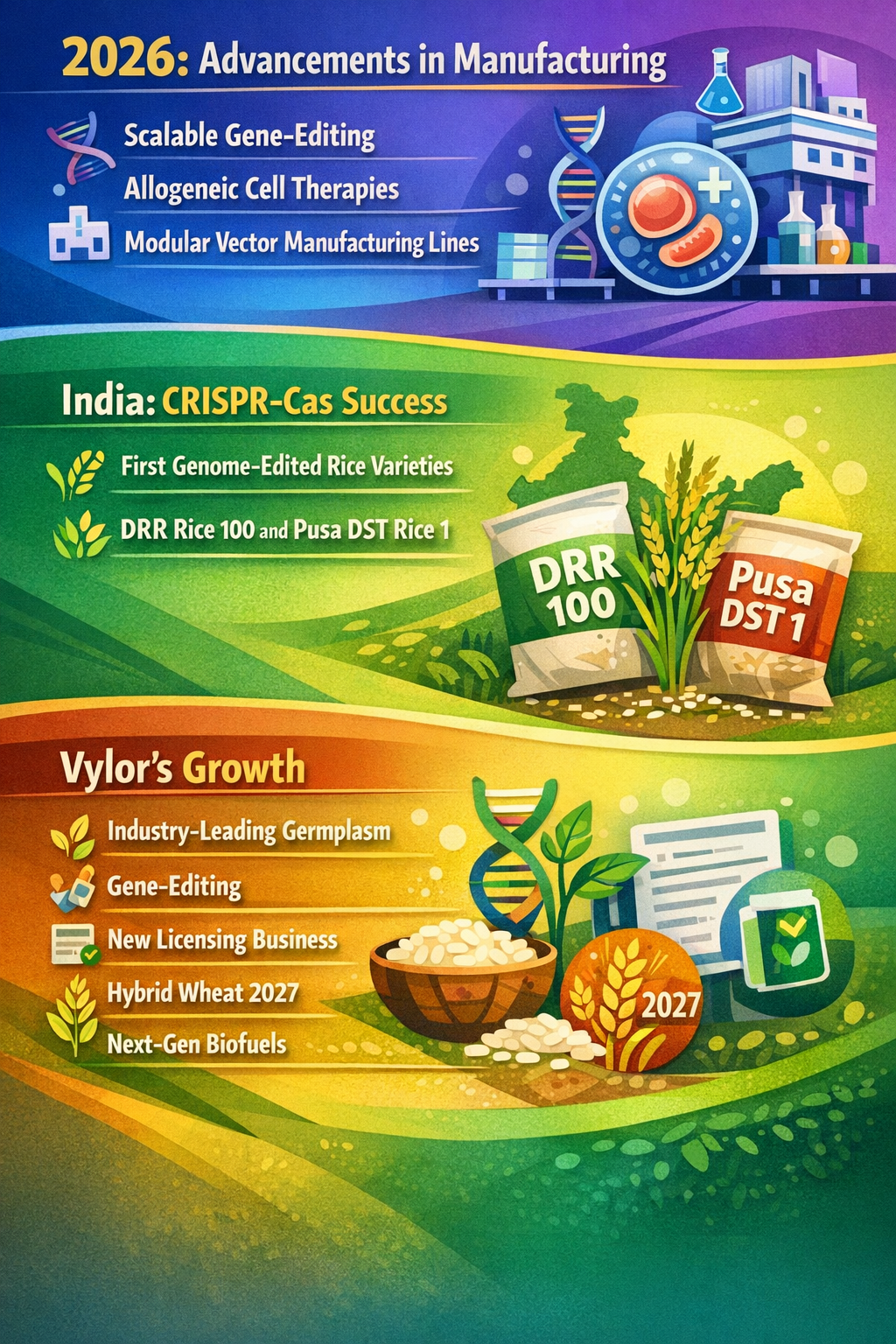
Moreover, regulatory frameworks, such as those shaping CRISPR-based crop innovations in India, highlight increasing demands for science-based, transparent governance (PMC NCBI 10/02/2026), yet these are ill-equipped for forms of life alien to natural biochemistry. The industrial implications resonate with the complexity of advanced modular manufacturing lines for novel modalities (IMJ Health 12/01/2026), where current platforms assume canonical biomolecular targets.
Disruption Pathway
The creation and potential deployment of mirror life would unfold through sequential accelerants: progress in synthetic chemistry enabling stable mirror biomolecules; advanced computational modeling to predict mirror organism viability (Segal’s team); and breakthroughs in modular manufacturing adapted for enantiomeric substrates (IMJ Health 12/01/2026).
Such mirror life forms could bypass existing immune protections, introducing unprecedented biosecurity risks that stress current surveillance and containment protocols. This may trigger structural adaptation in regulatory frameworks, requiring new definitions of “life” and “pathogen” that incorporate orthogonal biochemistries (PMC NCBI 10/02/2026).
Consequently, industrial structures might bifurcate, spurring dedicated mirror-biochemistry manufacturing clusters separated from canonical biotech lines to prevent cross-contamination and to enable tailored supply chains (AgTech Navigator 06/05/2026).
Feedback loops may include accelerated dual-use research debates, insurance and liability market shifts due to unfamiliar biological risks, and intensified public scrutiny fueled by the extraordinary potential of mirror life to evade natural defenses (Ecoticias 06/05/2026).
Dominant industry models could shift from broadly convergent bioengineering platforms toward niche, orthogonal manufacturing ecosystems with parallel regulatory regimes. This fragmentation would require new governance approaches, potentially transnational, given the borderless risks posed by mirror organisms.
Why This Matters
Decision-makers deploying capital should be aware that conventional biotech investments focusing solely on canonical biology might miss emerging markets or face unexpected liabilities if mirror life ventures materialize. Companies pioneering mirror life platforms could command monopoly rents or face unprecedented operational burdens.
Regulators must anticipate the challenge of defining safety and compliance standards for entities with non-natural biochemistries, as current frameworks tailored for DNA/RNA and L-amino acid systems may be insufficient. This gap introduces risks for public health governance and ecosystem integrity.
Competitive positioning in agriculture, pharmaceuticals, and biosecurity sectors is likely to pivot around mastery of orthogonal biosystems, potentially reshuffling market leaders and supply chain dynamics. Liability frameworks and insurance contracts may need restructuring to address unknown failure modes of mirror synthetic life.
Governments may need dedicated oversight bodies specializing in non-canonical life forms and to coordinate international norms to avoid biosafety and bioethical dilemmas.
Implications
This wildcard could plausibly evolve into a structural challenge that transforms synthetic biology’s operational, regulatory, and industrial landscape over the next two decades. Mirror life may necessitate a bifurcation in biotechnology pathways: canonical and mirror biologies, each with distinct safety, manufacturing, and governance regimes.
It is unlikely that this development is mere hype—its biochemical basis is well-founded in chirality science—but widespread adoption is contingent on major breakthroughs. Conversely, its appearance might remain niche or restricted due to ethical, legal, and technical hurdles. Competing interpretations include viewing mirror life as a laboratory curiosity with limited practical application versus a foundational shift redefining life sciences.
Early Indicators to Monitor
- Patents and publications describing stable mirror biomolecules and their synthesis
- Emergence of specialized venture capital funding targeting mirror life technology startups
- Regulatory drafts or consultations addressing non-canonical biochemical entities
- Development of modular manufacturing lines validated for mirror substrates analogous to existing gene-editing facilities
- Formation of international research consortia studying ethical and biosecurity implications of synthetic mirror life
Disconfirming Signals
- Persistent biochemical instability or toxicity limiting mirror life viability
- Establishment of restrictive legal prohibitions effectively halting mirror life research
- Failure to develop scalable manufacturing platforms for mirror biomolecules
- Robust natural or engineered systems proving effective against mirror-life organisms, reducing risk concerns
Strategic Questions
- How should capital allocation strategies integrate the potential bifurcation between canonical and mirror synthetic biology platforms over the next two decades?
- What governance and regulatory frameworks are needed to anticipate and manage biosecurity risks introduced by mirror life, and how can international coordination be ensured?
Keywords
Mirror life; Biotech regulation; Synthetic biology; Biosecurity; Advanced manufacturing; Biochemical orthogonality; Capital allocation
Bibliography
- Scientists warn that synthetic mirror bacteria could slip past natural defenses and the threat is not a virus but a form of life built backwards. Ecoticias. Published 06/05/2026.
- Manufacturing for advanced modalities will continue to mature in 2026: scalable gene-editing, allogeneic cell therapies, and modular vector manufacturing lines. IMJ Health. Published 12/01/2026.
- WIRED's headline-level thesis is about platform thinking: gene-editing technologies are not just for inherited disease - they might also be engineered into programmable antiviral systems. Scientific Inquirer. Published 05/01/2026.
- A clearer, science-based regulatory framework, supported by transparent communication and stakeholder engagement, will be crucial for advancing the responsible adoption of CRISPR-based innovations in Indian agriculture. PMC NCBI. Published 10/02/2026.
- Vylor's success will be driven by industry-leading germplasm, biotech, and gene-editing capabilities, as well as a world-class pipeline that includes an exciting new licensing business, proprietary hybrid wheat technology launching in 2027, and a next-gen biofuels development program. AgTech Navigator. Published 06/05/2026.