
Emerging Urban Stratification: The Growing Socioeconomic Divide in Global Cities
As the world’s urban centers become hubs of wealth and innovation, an under-recognized weak signal is emerging: the intensification of socioeconomic stratification within global metropolises. While cities have long been engines of opportunity, recent developments indicate a future where increasing income inequality, housing scarcity, and infrastructure overload may push lower-income residents to the margins. This emerging trend could disrupt sectors ranging from real estate and transportation to social services and governance, requiring new strategies to manage urban growth equitably and sustainably.
What’s Changing?
Recent news highlights mounting pressures in global cities that may presage a widespread urban crisis. For instance, cities like Dubai, often viewed as gateways to opportunity and economic advancement, are experiencing unprecedented congestion, soaring housing costs, and infrastructure challenges (The Independent). These symptoms indicate an intensification of **urban stratification**, where the concentration of wealth and opportunity heightens income disparities and pushes lower-income populations into less desirable urban peripheries or beyond city boundaries.
This trend is intertwined with broader global issues such as persistent inflationary pressures, social polarization, and political populism that together complicate urban governance and service delivery (Daily New Nation). Economic factors such as inflation and supply chain crises limit the ability of governments and developers to expand affordable housing, further straining low-income residents already grappling with rising living costs.
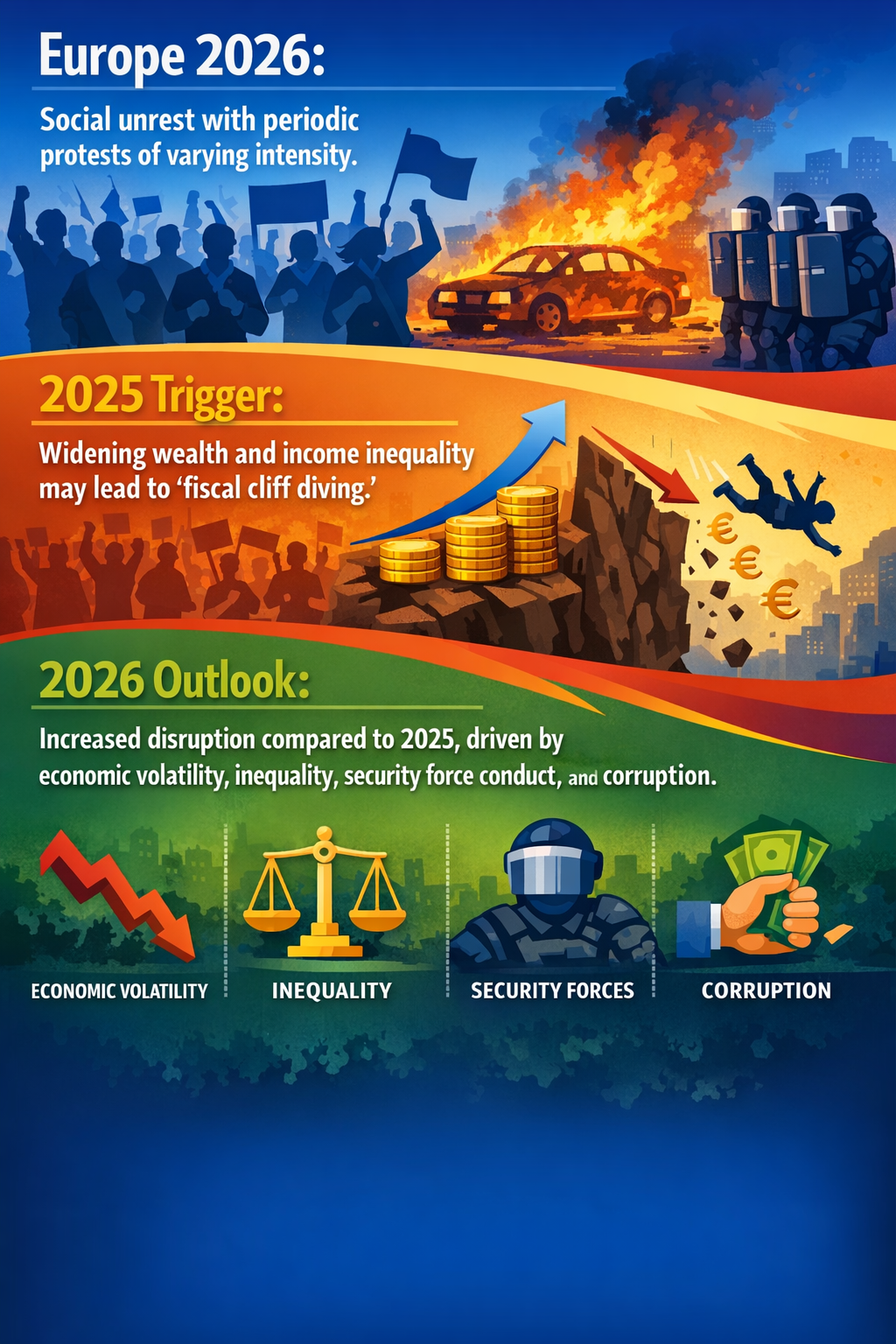
Social unrest with periodic protests predicted in Europe during coming years provides a stark reminder of the tensions underlying urban stratification (iLiberty Institute). These protests may be connected to grievances around economic inequality, immigration policy, and political polarization that are particularly pronounced in urban environments. The confluence of these stressors creates a fragile urban social fabric, prone to disruption.
Additionally, environmental challenges compound urban pressures. Climate change impacts, biodiversity loss, and pollution affect livability in cities, disproportionately burdening lower-income communities in vulnerable areas (IISD). These factors symbolize a systemic urban vulnerability that might accelerate socioeconomic stratification as wealthier residents insulate themselves behind adaptive infrastructure and services less accessible to others.
Why is This Important?
The intensification of socioeconomic divides in global cities has profound implications. Cities will likely remain engines of economic activity, but if access to opportunities becomes increasingly clustered among affluent groups, overall urban productivity and social cohesion could suffer. The creation of isolated enclaves of wealth alongside expanding lower-income peripheries could fuel political instability and social unrest.
Industry sectors connected to housing, transport, and urban infrastructure may face disruption from shifting demand patterns and rising social tensions. For example, the housing market may fragment into hyper-exclusive luxury zones and underserved affordable housing areas, complicating investment strategies and requiring new regulatory frameworks.
Governments and urban planners may find their traditional approaches inadequate to manage these compounding challenges. The weak signal in current overcrowding, traffic congestion, and rising inequality portends a future where cities must rethink governance, community engagement, and inclusive policy frameworks to maintain stability and prosperity.
For businesses, ignoring these trends risks reputational damage and operational challenges in urban markets. Yet, anticipating and adapting to these dynamics could open opportunities for innovative solutions in affordable housing, sustainable urban transport, and inclusive community services.
Implications
The trajectory of growing urban stratification suggests several critical areas for strategic foresight and action:
- Urban Governance Models: City authorities may need to adopt adaptive policies that integrate housing affordability, social inclusion, and environmental resilience with economic growth strategies.
- Community Participation: Scaling up mechanisms for inclusive governance could help mitigate social unrest by ensuring marginalized populations have a voice in urban planning decisions.
- Infrastructure Investment: Targeted investment in multi-modal transport and green infrastructure might alleviate congestion and environmental impacts that disproportionately affect vulnerable populations.
- Corporate Responsibility: Businesses operating within urban ecosystems could harness public-private partnerships to foster inclusive economic opportunities and sustainable neighborhood development.
- Technological Innovation: Use of data analytics, IoT (Internet of Things), and AI (Artificial Intelligence) in urban management could improve resource allocation but must be executed transparently to avoid reinforcing inequalities.
This urban stratification weak signal challenges assumptions about the inevitability of “smart city” improvements benefiting all residents equally. Instead, it suggests that without deliberate anticipatory governance and cross-sector collaboration, the urban future may deepen divides rather than bridge them.
Questions
- How can urban policy frameworks evolve to simultaneously support economic growth and inclusive social development in megacities?
- What innovative financial models might fund equitable infrastructure and affordable housing in high-demand urban markets?
- To what extent will technology-driven urban management improve livability without exacerbating digital divides?
- How might businesses align their growth strategies with urban resilience priorities and stakeholder expectations on equity?
- What early indicators could signal tipping points for social unrest driven by urban socioeconomic stratification?
Keywords: Urban Stratification; Socioeconomic Divide; Income Inequality; Affordable Housing; Urban Governance; Social Unrest; Climate Change; Infrastructure Investment
Bibliography
- Extreme weather, social polarization, misinformation and fears of global recession and persistent inflation are adding to uncertainty. Daily New Nation
- In 2026, there will be a lot of social unrest in Europe, with periodic outbreaks of protests of varying content and intensity. iLiberty Institute
- Europe could face severe social unrest due to ongoing economic pressures, immigration policies, and political polarization. Geopolitics Unplugged
- The concentration of wealth and opportunities created in global cities may cause income inequality that pushes out lower-income residents. The Independent
- The Earth is in the grips of ever-growing threats, including climate change, unprecedented biodiversity loss, chemical and plastic pollution, increasing land degradation, wars and conflicts, supply chain crises, and rising waves of political populism. International Institute for Sustainable Development