
The Emergence of Tokenized Asset Interoperability: A Weak Signal Poised to Disrupt Global Finance
Tokenized assets—the digital representation of real-world assets on blockchain networks—are projected to reach a valuation of $30 trillion within the next decade. While broader trends such as decentralized finance (DeFi) expansion and regulatory maturation shape this landscape, a less obvious but pivotal development is gaining momentum: the evolution of interoperability standards for tokenized assets. This weak signal suggests a future where seamless integration across diverse blockchain protocols, data privacy frameworks, and compliance regimes could fundamentally alter capital markets, cross-border payments, and institutional finance in the coming years.
What’s Changing?
The tokenization of real-world assets (RWAs) encompasses financial securities, commodities, real estate, and other tangible or intangible economic goods digitized as blockchain-based tokens. This transformation enables faster settlement, increased liquidity, and fractional ownership, attracting interest across traditional financial institutions, technology providers, and regulators. However, the rapid growth of tokenized assets has exposed interoperability challenges, creating fragmentation across multiple ecosystems that rely on different data formats, smart contract standards, and compliance protocols.
Currently, tokenized asset markets operate within siloed blockchain environments—Ethereum, Binance Smart Chain, EVM-compatible networks like Cronos, and private institutional chains. Each uses disparate data models, governance rules, and transaction validation approaches, which complicate asset transfers, custody arrangements, and regulatory reporting. A growing chorus of industry voices points to the need for robust interoperability standards that harmonize data models, compliance expectations, user privacy, and transaction orchestration across networks (MEXC News).
Simultaneously, regulatory bodies—including the U.S. government with acts like the Clarity for Payment Stablecoins Act and Canada’s central bank—are integrating stablecoins and tokenized deposits into existing payment and anti-money laundering (AML) frameworks. These regulations demand strong assurances on asset backing, user redemption rights, and compliance transparency to embed digital tokens into mainstream financial infrastructure (Lexology). The convergence of mature regulatory standards and interoperable institutional networks could enable sovereign digital securities to transform capital formation and boost cross-border business transactions (IndexBox).
Meanwhile, advancements in artificial intelligence (AI) and machine learning increasingly support real-time valuation models, risk analytics, and predictive insights tailored to tokenized assets. AI may also automate compliance monitoring and threat detection in hyperconnected financial systems, countering fraud at scales faster than conventional controls (NASSCOM, Finextra).
Simultaneously, the role of smart contracts—which self-execute agreements based on programmed conditions—is expected to expand from niche blockchain applications to ubiquitous tools akin to Application Programming Interfaces (APIs) in traditional Web2 systems. This evolution enhances composability and coordination among tokenized assets across platforms (DevelopCoins).
Collectively, these developments suggest a future where tokenized assets may no longer be constrained by blockchain boundaries or localized legal frameworks. Instead, they might operate within interconnected digital financial infrastructure, offering new modes of capital formation, liquidity management, and transaction execution across industries and geographies (AInvest).
Why Is This Important?
The rise of interoperable tokenized asset networks has profound implications for multiple stakeholders:
- Financial Institutions: Banks, asset managers, and exchanges could integrate tokenized assets more efficiently, reducing operational silos and unlocking new liquidity pools.
- Regulators: Unified interoperability standards coupled with AI-powered compliance offer pathways to reduce systemic risks and enforce transparency without stifling innovation.
- Corporates and SMEs: Tokenized capital markets with cross-border interoperability could lower funding costs and enable new financial products previously inaccessible due to complexity or jurisdictional barriers.
- Governments: Sovereign digital securities that transact seamlessly across blockchain networks may redefine national capital formation strategies and influence monetary policy tools.
- Technology Providers: Interoperability standards create opportunities to build middleware, oracles, and analytics solutions pivotal for managing multi-chain ecosystems.
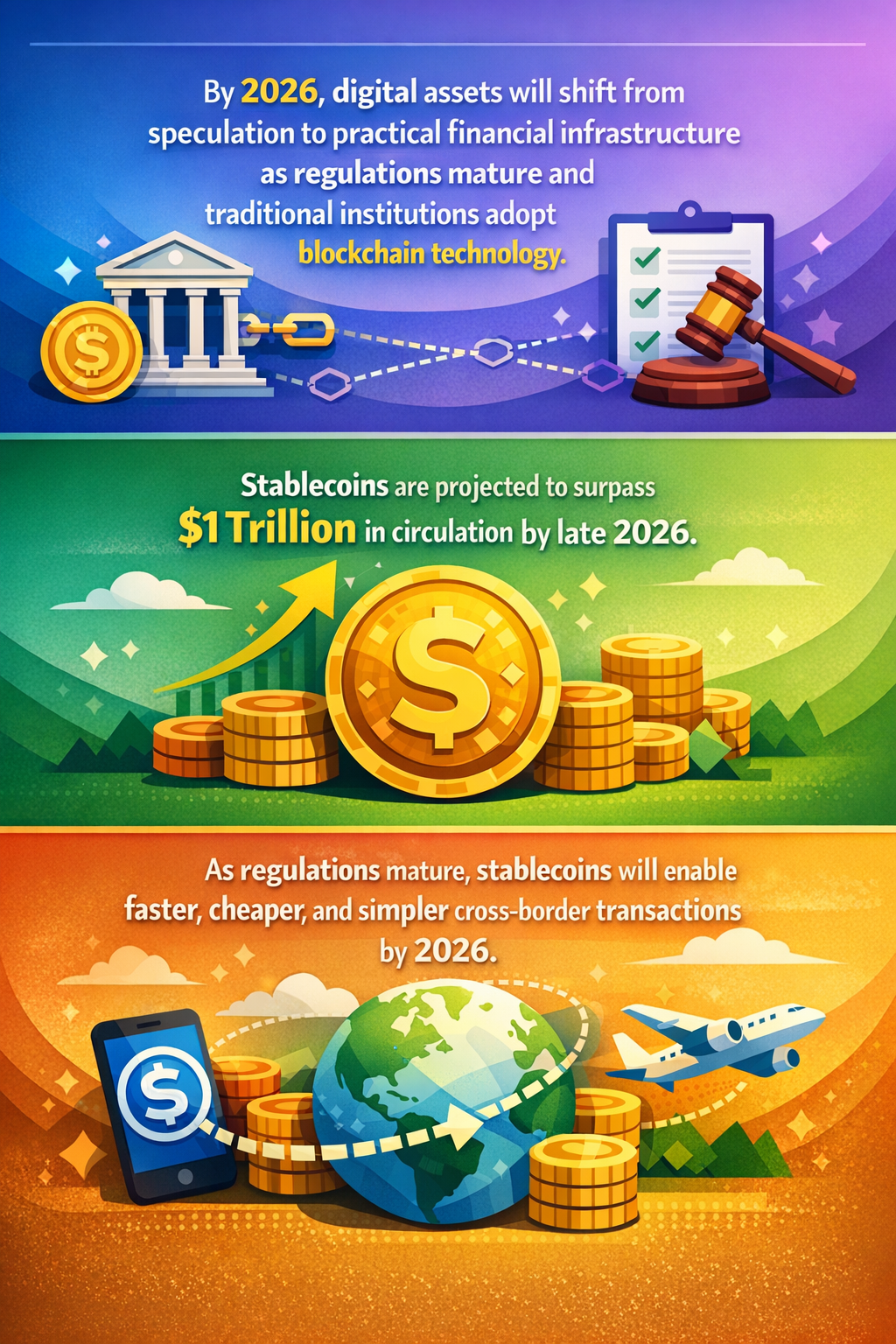
Failing to develop and adopt interoperability standards risks entrenching fragmentation and inefficiency. Asset holders and users could face higher transaction costs, delayed settlements, and opaque compliance mechanisms, depressing trust and adoption. Conversely, seamless tokenized asset interoperability may catalyze the transition from speculative digital tokens to practical financial infrastructure integrated with traditional finance (TradFi), propelling the global financial system toward greater democratization and innovation (Zipmex, Ivey Business Journal).
Implications
Organizations need to recognize interoperability standards as a strategic priority, not merely a technical or compliance issue. Key implications include:
- Cross-Industry Collaboration: Successful development will require coordination among blockchain consortia, financial institutions, technology developers, and regulators across jurisdictions.
- Investment in Integration Layers: Middleware services that enable data normalization, compliance monitoring, and smart contract orchestration will become critical assets in the digital finance architecture.
- New Roles for AI: Machine learning algorithms may automate dynamic compliance checks and risk assessments in multi-chain transactions, reducing friction and improving security.
- Regulatory Engagement: Proactive engagement with evolving regulatory regimes can shape interoperable standards to balance innovation with risk mitigation.
- Organizational Agility: Institutional investors and service providers should prepare to handle diversified digital assets, shifting from siloed product lines to integrated digital asset portfolios.
The growing maturity of blockchain interoperability could redefine trade finance, real estate tokenization, supply chain finance, and capital markets. Companies unprepared for these shifts might struggle with legacy modes of operation incompatible with multi-chain ecosystems. Governments that harness sovereign digital securities along interoperable networks could promote efficient capital allocation and policy agility on a global scale.
Questions
- How can organizations participate effectively in shaping interoperability standards for tokenized assets?
- What investments in technology and organizational capabilities are required to operate across multi-chain environments with diverse compliance regimes?
- How might AI and machine learning be deployed to automate compliance and risk monitoring in interoperable tokenized asset networks?
- Which industries beyond finance could be disrupted by seamless tokenized asset interoperability?
- What governance models will balance privacy, transparency, and security in cross-jurisdictional, multi-chain token ecosystems?
- How might sovereign digital securities influence national monetary policies when combined with interoperable financial networks?
Keywords
tokenized assets; interoperability; blockchain; decentralized finance; stablecoins; smart contracts; financial regulation; capital formation; artificial intelligence; machine learning
Bibliography
- As tokenized assets are expected to have a valuation of $30 trillion within the decade, the need for an interoperability standard for data, compliance, privacy, and orchestration is increasing. MEXC News. https://www.mexc.co/en-PH/news/532481
- DeFi is projected to expand significantly in 2026 and beyond, remaining a dominant force in the crypto space. Finextra. https://www.finextra.com/blogposting/30699/blockchain-and-crypto-trends-in-2026-bridging-the-gap-between-tradfi-and-defi
- In 2026, AI and machine learning are increasingly being used to provide real-time valuation models, risk analytics, and predictive insights for tokenized assets. NASSCOM Community. https://community.nasscom.in/communities/blockchain/top-10-trends-shaping-future-real-world-asset-tokenization-2026
- As policymakers and the Bank of Canada integrate stablecoins with existing payments and AML regimes. Lexology. https://www.lexology.com/library/detail.aspx?g=e1de972b-af52-40e7-81fd-9bab1fff5397
- With instant payments, AI-driven fraud, digital assets, and hyperconnected financial networks reshaping global transactions. Finextra. https://www.finextra.com/newsarticle/47177/finextra-launches-nextgen-fincrime-a-new-leadership-event-redefining-trust-in-finance
- In 2026, the convergence of mature regulatory frameworks and interoperable institutional networks will allow sovereign digital securities to redefine global capital formation. IndexBox. https://www.indexbox.io/blog/bitcoin-defi-and-tokenized-assets-lead-2026-crypto-development/
- Between 2026 and 2030, smart contracts are expected to become as common as APIs in Web2. DevelopCoins. https://www.developcoins.com/future-of-smart-contract-development-trends-and-innovations
- Stablecoins will have a path to $2 trillion long-term, hitting $500 billion in 2027. Pantera Capital. https://panteracapital.com/blockchain-letter/navigating-crypto-in-2026/
- Digital assets are expected to transition from speculation to practical financial infrastructure in 2026. AInvest. https://www.ainvest.com/news/digital-assets-transition-speculation-infrastructure-2026-riley-predicts-2601/
- Digital assets will move from fragmented experimentation toward a stable, integrated role in the global financial system. Crowdfund Insider. https://www.crowdfundinsider.com/2026/01/257254-youhodler-ceo-ilya-volkovs-2026-crypto-predictions-for-stablecoins-ai-lightning-bitcoin-and-more/